
Menopause often brings changes in women’s health that feel sudden and confusing: weight gain that no longer responds to the same habits, fatigue, and a sense that the body is working differently than before. These shifts are common and predictable. They reflect real biological changes, not a lack of effort or discipline.
Metabolism — the process by which the body converts food into energy — plays a central role in these changes. As hormone levels fluctuate during perimenopause and menopause, the body’s ability to burn calories properly declines. Muscle mass gradually decreases, fat distribution shifts, and energy levels may drop.(1)
Understanding the “why” makes it easier to apply the “how.” With the right tools, metabolic health during menopause can be supported and improved.
The Science: Why Metabolism Changes During Menopause
The Menopause Society notes that as all human bodies age, metabolism naturally slows, requiring adjustments in diet and physical activity to maintain healthy fat distribution. On top of this, menopause affects metabolism through a combination of hormonal shifts, muscle loss, and changes in how the body uses and stores energy. Together, these changes alter the body’s metabolic efficiency and increase the likelihood of weight gain — even when diet and activity remain unchanged.(2)(3)
The Role of Estrogen and Muscle Mass
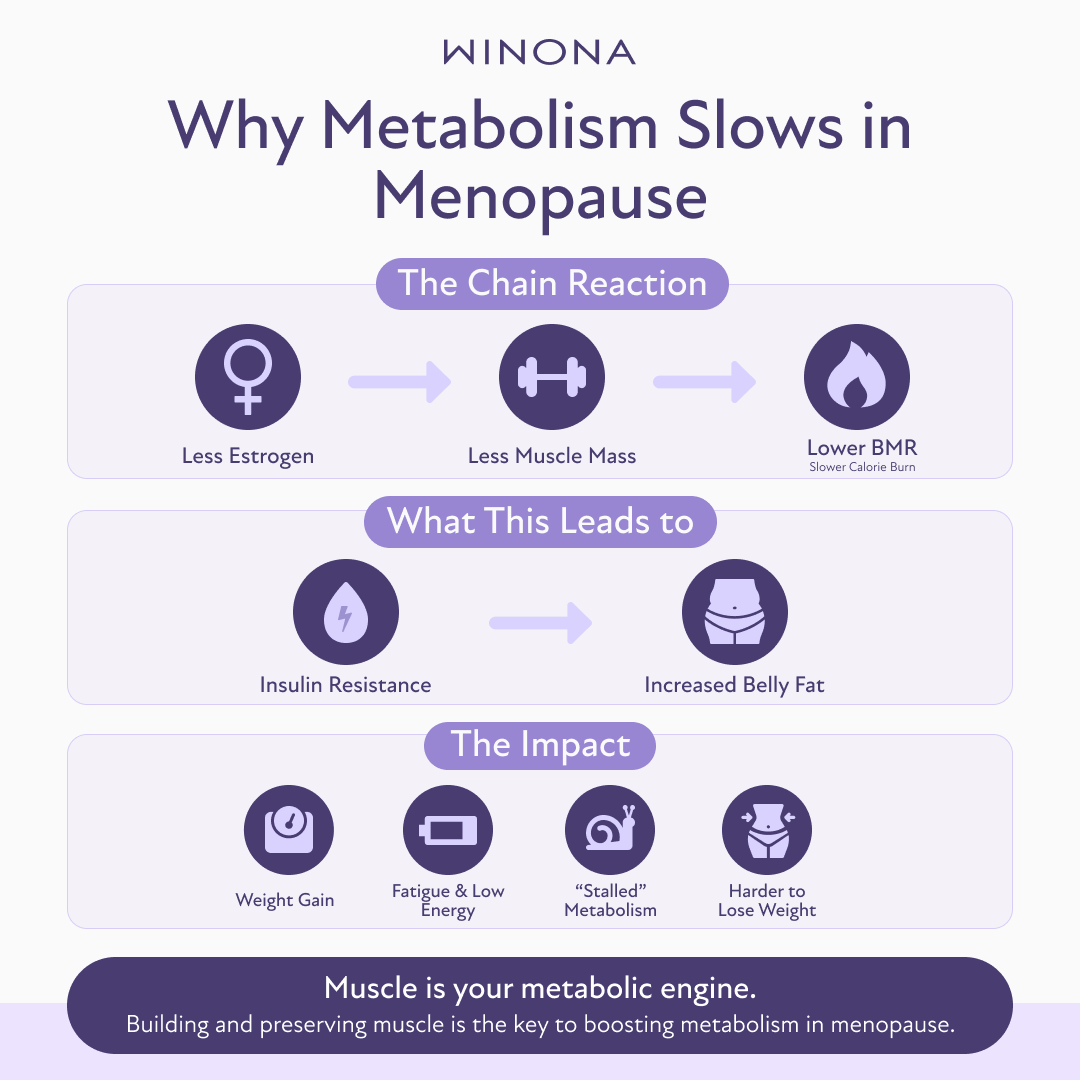
Estrogen plays an important role in regulating body composition, insulin sensitivity, and fat distribution. Before menopause, estrogen helps support lean muscle mass and directs fat storage toward the hips and thighs. As estrogen levels decline, several changes occur:
Muscle mass decreases more rapidly with age
Fat storage shifts toward the abdominal area
The body becomes less efficient at using glucose for energy
Loss of muscle is especially important because muscle tissue is metabolically active. It burns more calories at rest than fat tissue. When muscle mass declines, fewer calories are burned throughout the day — even during sleep — contributing to a slower metabolism, easier weight gain, and an increased body fat percentage.(2)(4)
Muscle burns significantly more calories at rest than fat does. This means that age-related muscle loss is one of the strongest drivers of a slower metabolism during menopause.
The Impact on Basal Metabolic Rate (BMR)
Basal metabolic rate (BMR) is the number of calories the body needs to maintain essential functions at rest, such as breathing, circulation, brain activity, and cellular repair. Studies from PubMed Central (PMC) indicate that BMR accounts for approximately 65% of daily energy expenditure.(2)(4)(5)
During menopause, the following happens:
Muscle loss lowers BMR
Estrogen decline reduces metabolic efficiency
Fewer calories are burned at rest
This means that even with the same eating patterns and activity level, weight gain becomes more likely. The body’s “calorie-burning” engine slows, and energy balance shifts.
The Influence of Other Hormones (Cortisol and Insulin)
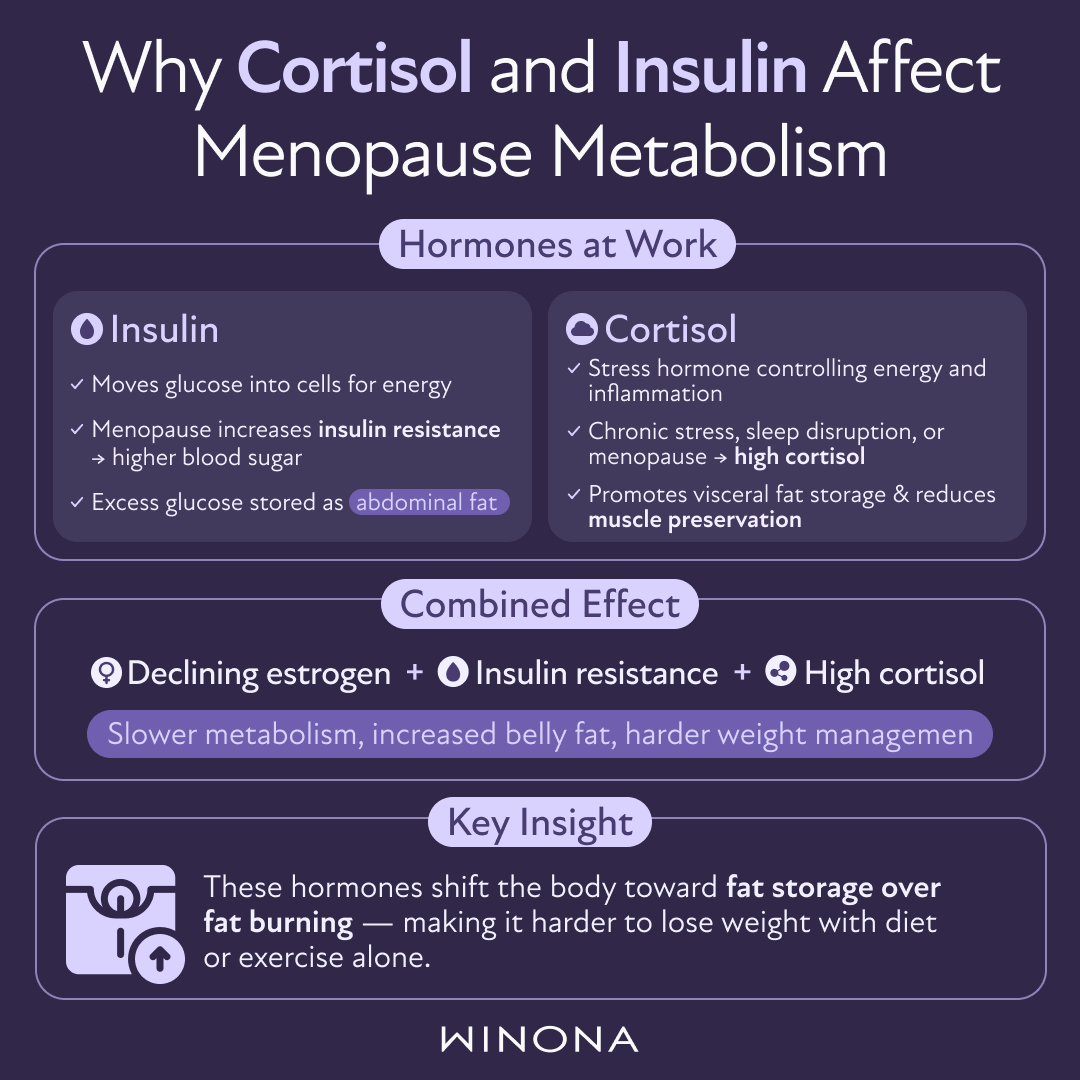
Metabolism is regulated by more than estrogen alone. Progesterone, thyroid hormones (T3, T4, and TSH), insulin, and cortisol all have crucial roles in regulating metabolic processes, but two of these play major roles.
Insulin:
Insulin helps move glucose from the bloodstream into cells for energy. During menopause, the body becomes more prone to insulin resistance. When cells do not respond efficiently to insulin, blood sugar levels rise, and excess glucose is more likely to be stored as fat, especially around the abdomen as belly fat.(1)(4)(5)(6)
Cortisol:
Cortisol is the body’s primary stress hormone. Chronic stress, disrupted sleep, and hormonal changes can elevate cortisol levels. High cortisol encourages fat storage, particularly visceral (abdominal) fat, and can interfere with muscle preservation.(1)(2)(4)(5)
Together, declining estrogen, increased insulin resistance, and elevated cortisol create a metabolic environment that favors fat storage over fat burning. This combination explains why menopause metabolism feels stalled and why traditional weight management strategies often stop working.(1)(4)(5)(6)
Metabolism and Cholesterol
Metabolism in menopause also impacts cholesterol levels. As estrogen declines, the body's decreased ability to regulate fat often leads to increased cholesterol levels. Estrogen helps maintain healthy lipid profiles by supporting higher levels of high-density lipoprotein (HDL), the "good" cholesterol, and lowering low-density lipoprotein (LDL), the "bad" cholesterol.(7)
With menopause-related metabolic changes, LDL levels often rise, increasing the risk of cardiovascular disease and thyroid dysfunction. Additionally, the natural increase in fat around the abdomen further contributes to cholesterol imbalances. Insulin resistance in menopause may also play a role, as it can lead to higher triglyceride levels, another risk factor for heart disease.(2)(5)
A 3-Part Action Plan to Boost Menopause Metabolism
Managing metabolism during perimenopause and menopause requires a targeted, multi-pronged approach. The most effective strategies focus on fueling muscle, building metabolic capacity, and addressing the underlying hormonal changes that drive metabolic slowdown.
1. Strategic Nutrition: Fuel Your Furnace
Nutrition during menopause is less about restriction and more about metabolic support. The goal is to nourish lean muscle, stabilize blood sugar, and provide the raw materials the body needs to function efficiently.
Prioritize Protein
Protein is essential for protecting and building muscle mass — the primary driver of metabolic rate. During menopause, protein needs increase because muscle loss accelerates with age and hormonal changes.(1)(4)
Benefits of adequate protein intake include the following:
Supports muscle maintenance and repair
Increases satiety, reducing overeating
Has a higher thermic effect, meaning it burns more calories during digestion
Most women benefit from including a source of high-quality protein at every meal, such as eggs, fish, poultry, tofu, legumes, or Greek yogurt.
Fill Up on Fiber
The Framingham Nutrition Study found that fiber supports metabolic health by improving digestion, stabilizing blood sugar, and promoting fullness. It also plays a key role in gut health, which influences inflammation, insulin sensitivity, and energy regulation.(1)(4)
High-fiber foods include the following:
Vegetables
Fruits
Whole grains
Beans and lentils
Seeds and nuts
A fiber-rich diet helps reduce insulin spikes, lowers triglycerides, and supports weight management during menopause.(1)(4)
Balance Blood Sugar
Blood sugar stability is central to metabolism. Frequent spikes and crashes increase fat storage, drive hunger, and worsen fatigue.(4)(6)
The following are strategies to support blood sugar balance:
Pair carbohydrates with protein and healthy fats
Choose complex carbohydrates over refined sugars
Avoid skipping meals
Limit sugary beverages and ultra-processed foods
Reducing blood sugar volatility improves insulin sensitivity and reduces the metabolic strain that contributes to menopause-related weight gain.
Metabolism-Boosting Foods
Category | Food Examples | Why They Help Metabolism |
High-Protein | Eggs, Greek yogurt, chicken, turkey, fish, tofu, tempeh, lentils | Supports muscle maintenance, increases calorie burn during digestion, promotes fullness |
High-Fiber | Leafy greens, berries, beans, lentils, oats, chia seeds, flaxseeds, quinoa | Stabilizes blood sugar, supports gut health, improves insulin sensitivity |
Avoid Alcohol
Alcohol metabolism changes during menopause because the body's ability to process alcohol decreases. This can contribute to weight gain and metabolic imbalances, as alcohol is metabolized differently from other nutrients and may increase fat storage.(1)(7)
Limiting alcohol intake can support metabolic health, weight loss, and menopause symptom management.(1)(7)
Support Metabolism with Key Nutrients
Certain supplements may support metabolism in menopause:(1)(8)
Omega-3 Fatty Acids: Help reduce inflammation and improve insulin sensitivity
Vitamin D and Calcium: Support bone health and metabolic function
Magnesium: Plays a role in energy production and muscle function
Green Tea Extract: Contains properties that may help increase calorie burn
Protein Supplements: Aid in muscle maintenance and metabolic support
It’s important to remember that while supplements can complement a healthy lifestyle, they should not replace balanced nutrition and regular physical activity.
2. Smarter Exercise: Build Your Engine
Exercise remains one of the most powerful tools for metabolic health, but the type of exercise matters more than ever during menopause. The focus shifts from calorie-burning alone to building and preserving lean muscle mass.(1)(4)(7)
Why Strength Training Is Non-Negotiable
Strength training is the single most effective way to increase and sustain muscle mass — and therefore maintain or raise metabolic rate.
Benefits include the following:(1)(7)
Increased resting energy expenditure
Improved insulin sensitivity
Better bone density
Reduced visceral fat
Improved posture, balance, and functional strength
Even two to three strength training sessions per week can significantly improve body composition and metabolic health. This can include resistance training with weights, resistance bands, bodyweight exercises, or machines.
Strength training directly counteracts the muscle loss that drives metabolic slowdown during menopause.
The Role of HIIT and Cardio
While strength training forms the foundation, cardiovascular exercise and high-intensity interval training (HIIT) play complementary roles.
HIIT:
Short bursts of intense effort followed by recovery periods improve cardiovascular fitness, insulin sensitivity, and post-exercise calorie burn. HIIT can be especially effective for time-efficient metabolic conditioning.(4)
Cardio:
Research in the International Journal of Obesity shows that moderate-intensity aerobic exercise — like walking, cycling, swimming, or spinning — supports heart health, stress regulation, and energy levels. It also contributes to overall calorie expenditure and metabolic resilience.(4)(6)
The most effective exercise approach during menopause blends:
Strength training for muscle preservation
HIIT for metabolic stimulation
Cardio for cardiovascular disease prevention and metabolic support
Flexibility and balance training for injury prevention and longevity
3. Medical Support: Address the Root Cause
Lifestyle strategies are foundational, but the menopause transition is fundamentally a hormonal transition. For many women, addressing the hormonal root of metabolic slowdown is essential for meaningful, sustainable improvement.
Bioidentical hormone therapy (HT), sometimes called hormone replacement therapy (HRT) or menopausal hormone therapy (MHT), directly addresses estrogen loss and is seen as a potential way to regulate metabolism changes in menopause. Research shows that hormone therapy may help counteract the metabolic effects of declining estrogen by supporting the following:(1)(2)
Muscle mass protection
Improved insulin sensitivity
Reduced visceral fat accumulation
More stable cortisol levels
Healthier lipid profiles
Estrogen plays a key role in metabolic regulation — when estrogen levels decline, the body shifts toward fat storage, reduced energy expenditure, and increased metabolic risk. Hormone therapy works by restoring estrogen levels to a healthier range, which can help normalize metabolic processes.
Research shows that hormone therapy may help to do the following:(1)(2)
Reduce abdominal/visceral fat
Improve body composition
Lower the risk of insulin resistance
Support lean muscle mass
Improve energy levels
Estrogen also influences thyroid function, which regulates metabolism. By balancing hormones and supporting thyroid health, HT can help prevent further metabolic slowdown. Balanced estrogen levels have also been shown to regulate cortisol, potentially reducing stress-related weight gain.(5)(7)
DHEA, a hormone precursor that converts into estrogen and testosterone in the body, may also support metabolic health. Evidence suggests it can:
Reduce abdominal fat
Improve lean muscle mass
Lower BMI
Support energy and vitality
While hormone therapy is not a weight loss medication, it can remove a major biological barrier to metabolic health. Its effectiveness varies based on individual factors, including genetics, lifestyle, and overall health. The best outcomes occur when HRT is combined with healthy lifestyle adjustments, including proper nutrition and regular exercise.
The Right Approach to Menopause Weight Gain
A slowing metabolism during menopause can feel discouraging, but it’s both understandable and manageable. These changes reflect predictable biological shifts, not a loss of discipline or willpower. With the right approach, metabolic health can be protected and even strengthened during this stage of life.
The most effective strategy brings together:
Targeted nutrition that supports muscle and stabilizes blood sugar
Strength-focused movement that rebuilds metabolic capacity
Medical support that addresses the hormonal drivers of change
Every woman’s body responds differently, which is why personalized, evidence-based women’s health care matters. Menopause is not the end of metabolic vitality — it is an opportunity to work with the body in a smarter, more informed way and to build a foundation for long-term health, strength, and resilience.
Take the next step toward a healthier metabolism.
Take this quiz to find out what your body needs, and explore science-backed treatment options.