
Attention-deficit hyperactivity disorder (ADHD) affects attention, impulse control, and energy levels. While ADHD often begins in childhood, many women notice significant changes in their symptoms during perimenopause and menopause. For many women with ADHD, the onset of perimenopause can feel like their symptoms have been amplified overnight.(1)(2)
Hormones — especially estrogen — play a key role in brain function. Estrogen helps regulate neurotransmitters like dopamine and serotonin, which support focus, memory, motivation, and mood. As estrogen levels decline during menopause, these systems become less stable, leading to new or worsening cognitive and emotional challenges.(3)
The Neurological Link: How Estrogen Decline Impacts ADHD
A recent study on a survey published by the Cambridge University Press examined how perimenopause and menopause affect ADHD symptoms. The analysis included 2,653 women aged 46 and older and revealed some significant trends. More than half of the women reported that ADHD had its most significant effect on daily life between the ages of 40 and 59.(3)
Late ADHD Diagnosis Among Women
The survey also found that 43% of respondents were diagnosed with ADHD for the first time between the ages of 41 and 50. This finding highlights that many women may not notice their ADHD symptoms until hormonal changes during perimenopause make cognitive and emotional challenges more noticeable.(3)
The good news is that only 3% of women reported major ADHD challenges after the age of 60. This may mean that symptoms become less severe or that coping strategies improve after menopause — in other words, ADHD may get better with age.(3)
Estrogen’s Role in Modulating Dopamine
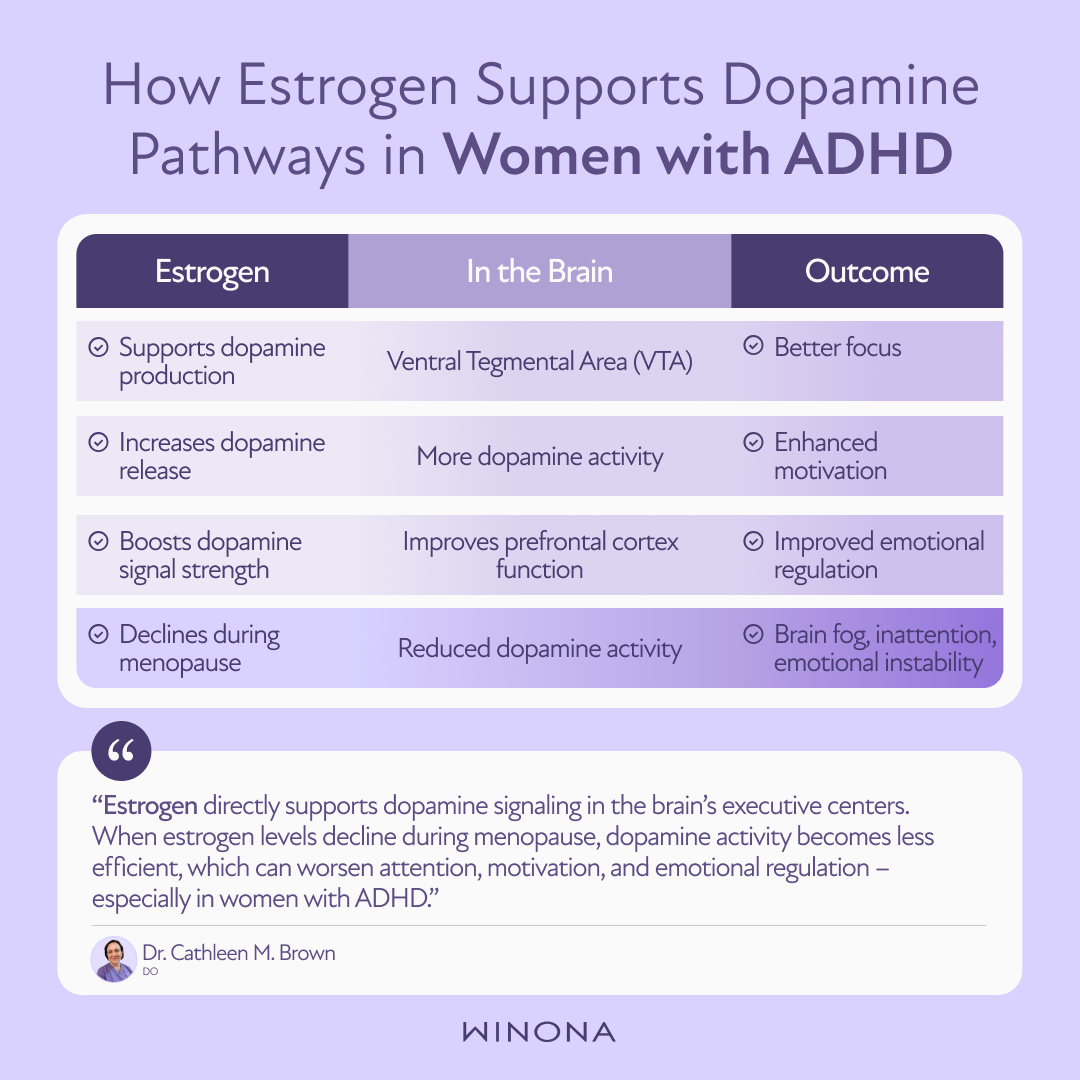
Estrogen directly influences dopamine, a neurotransmitter essential for attention, motivation, reward processing, and executive function. According to research from the National Institute of Health (NIH), dopamine activity helps the brain filter distractions, initiate tasks, and sustain focus.(4)
When estrogen levels decline during perimenopause and menopause, dopamine signaling becomes less efficient. This change can reduce mental clarity, increase distractibility, and lower motivation. For women with ADHD, who already experience dopamine regulation differences, this shift can intensify symptoms and make daily functioning feel more difficult.(1)(5)
The Impact on the Prefrontal Cortex and Executive Function
The prefrontal cortex manages executive functions, including the following:
Planning
Working memory
Emotional control
Decision-making
Estrogen supports blood flow, neuronal communication, and neurotransmitter balance in this region. Imbalanced progesterone and testosterone, relative to lower estrogen, may amplify impulsivity and hyperactivity.(5)
As estrogen declines, the prefrontal cortex becomes less efficient at regulating attention, impulse control, and emotional responses. This neurological shift explains why menopause often worsens executive dysfunction, emotional dysregulation, and cognitive fatigue in women with ADHD.(4)
In short, menopause worsens ADHD because estrogen decline disrupts dopamine function and prefrontal cortex regulation, two core systems involved in attention, motivation, and emotional control.
Clinical Manifestations: Which ADHD symptoms worsen in menopause?
Worsening Executive Function
The organization Children and Adults with ADHD (CHADD) notes that many women experience noticeable changes in cognitive performance during perimenopause and menopause. Common challenges include:(2)(3)(5)(6)
Difficulty sustaining attention
Increased procrastination
Memory lapses and forgetfulness
Poor time management
Disorganization and task avoidance
Slower information processing
Mental fatigue and brain fog
These symptoms reflect changes in dopamine signaling and prefrontal cortex function driven by estrogen decline.
Increased Emotional Dysregulation
The Menopause Society confirms that emotions often become more difficult during menopause. Many women report the following symptoms:(3)(5)(6)(7)
Heightened anxiety and stress sensitivity
Increased irritability and frustration
Strong emotional reactions to minor stressors
Rejection sensitivity
Low mood or reduced motivation
Reduced emotional resilience
These symptoms tend to be more pronounced during menopause, suggesting that some menopause-related cognitive complaints may look the same as ADHD symptoms. However, more research is needed to understand whether this is due to undiagnosed ADHD or temporary changes caused by shifting hormone levels.(3)(5)(6)
ADHD Across Reproductive Stages
A broader study examined ADHD symptoms across different reproductive stages:(1)
Premenopausal Women: Symptoms remained stable but varied with menstrual cycles.
Perimenopausal Women: ADHD symptoms intensified, likely due to erratic hormonal fluctuations.
Postmenopausal Women: Some experienced reduced symptoms, potentially due to hormonal stabilization, while others reported persistent cognitive challenges.
These patterns suggest that for many women, ADHD symptoms are more "state-like" than "trait-like," meaning they fluctuate based on hormonal shifts rather than remaining constant.(5)
Symptom Overlap: Menopause vs. ADHD
Symptom | Primarily Menopause | ADHD, Worsened by Menopause |
Hot flashes | ✅ | |
Night sweats/sleep disruption | ✅ | |
Brain fog | ✅ | ✅ |
Memory lapses | ✅ | ✅ |
Inattention/distractibility | ✅ | |
Emotional dysregulation (irritability, anxiety) | ✅ | ✅ |
Low motivation/fatigue | ✅ | ✅ |
Poor time management/difficulty prioritizing tasks | ✅ | |
Social sensitivity/rejection sensitivity | ✅ | |
Stress response changes/heightened reactivity | ✅ | ✅ |
Procrastination | ✅ |
The significant influence of sex hormones on serotonin, dopamine, and stress-response pathways emphasizes the importance of personalized treatment strategies when it comes to menopause and ADHD treatment.(1)

An Integrated Approach to Treatment and Management
Managing ADHD and menopause requires a coordinated strategy that supports both neurological and hormonal health.
Adjusting Stimulant Medications
Stimulant medications, including amphetamine-based options like amphetamine/dextroamphetamine salts and lisdexamfetamine, remain a first-line treatment for ADHD. These medications increase dopamine and norepinephrine activity, improving focus, impulse control, and executive function.(6)
During perimenopause and menopause, hormonal shifts can alter how the body absorbs and processes medications. As estrogen levels change, stimulant medications may feel less effective or wear off more quickly. A physician can assess symptom changes and adjust dosage, timing, or medication type to maintain consistent symptom control.(6)
The Role of Hormone Therapy (HT) for ADHD Symptoms
Hormone therapy (also called hormone replacement therapy or HRT) helps stabilize estrogen levels, which helps restore a more supportive neurological environment for dopamine signaling. By improving baseline brain chemistry, HRT may reduce menopause ADHD symptoms such as brain fog, emotional volatility, and cognitive fatigue.(8)(9)
Research suggests that estrogen therapy can support attention, working memory, and emotional regulation in menopausal women, especially those with preexisting ADHD. While HRT does not replace ADHD medication, it may enhance overall treatment effectiveness by addressing the hormonal drivers of symptom changes.(2)(9)
Safety and Interactions: Combining HT and ADHD Medications
Many women safely use both HRT and stimulant medications under medical supervision. Both therapies can influence heart rate, blood pressure, and metabolism, so physicians closely monitor cardiovascular health and medication response.(9)(10)
Estrogen can affect liver enzymes that process stimulant medications, which may alter medication levels in the bloodstream. A knowledgeable physician can adjust dosing, monitor side effects, and ensure safe and effective combined treatment.(10)
With careful medical supervision, it’s possible to safely and effectively use both HRT and ADHD medications together.
Cognitive Behavioral Therapy (CBT)
Cognitive behavioral therapy (CBT) provides structured, evidence-based tools to improve executive functioning and emotional regulation. CBT helps women with the following:(9)
Developing practical organizational systems
Improving time management and task initiation
Building emotional coping strategies
Reframing negative thought patterns
Strengthening self-regulation skills
CBT complements medical treatment and supports long-term symptom management across life stages.
Lifestyle Strategies
The following lifestyle habits strongly influence brain function and symptom control:(5)(9)
Regular Exercise: Consistent exercise enhances dopamine production, improves mood, and supports cognitive performance.
Consistent Sleep Routines: Maintaining a regular sleep schedule improves sleep quality, strengthening memory, attention, and emotional resilience.
Mindfulness Practices: Meditation, breathing exercises, and other mindfulness activities reduce stress and improve emotional awareness.
Structured Planning Tools: These tools support organization, task completion, and time management.
Balanced Nutrition: A balanced diet supports stable energy, blood sugar regulation, and neurotransmitter production.
These strategies reinforce both neurological and hormonal health.
The Importance of Recognizing ADHD in Menopausal Women
ADHD in women has historically been underdiagnosed, often mistaken for other mental health conditions like anxiety, mood disorders, or stress. When menopause begins, changes in hormone levels can intensify ADHD symptoms, highlighting the need for better awareness and diagnosis that take these shifts into account.
Managing co-occurring ADHD and menopause requires appropriate treatment and personalized care. Women can enhance their quality of life by seeking a physician who understands both hormonal health and the nuances of ADHD. This is the best approach to creating a safe, effective treatment plan for women in midlife and beyond.
Ready to get expert support?
Start your consultation with a Winona doctor today.